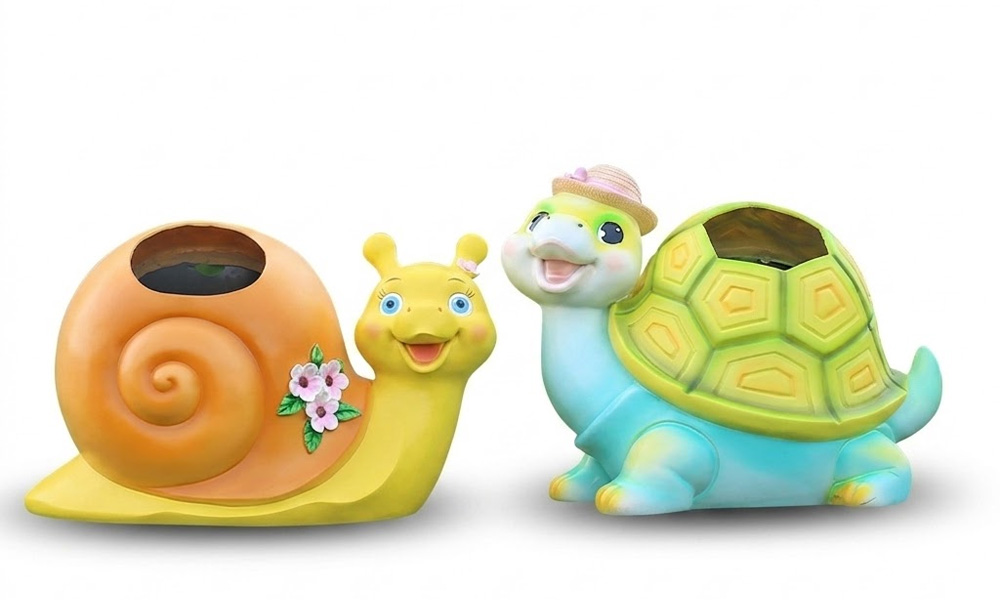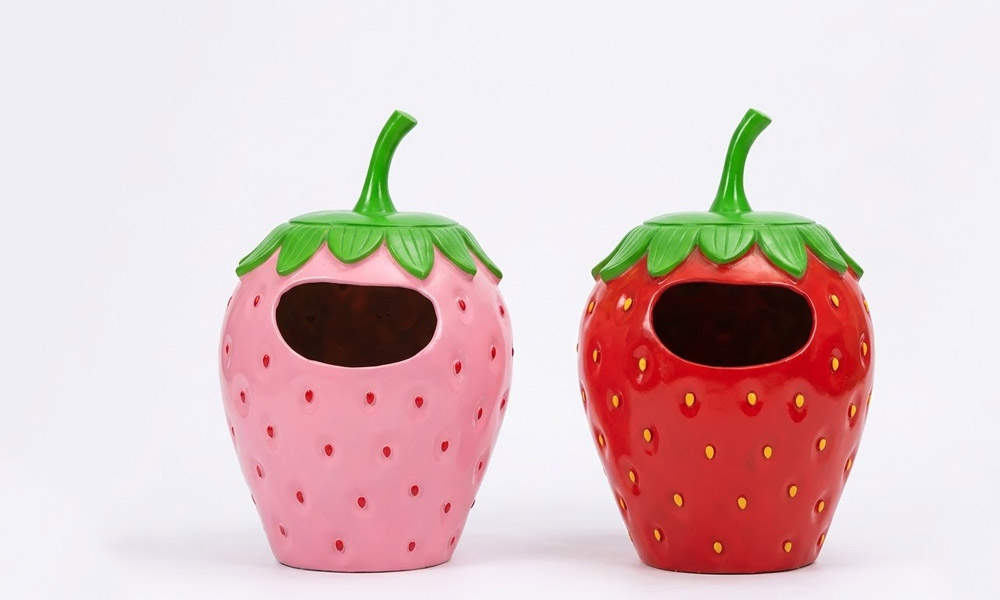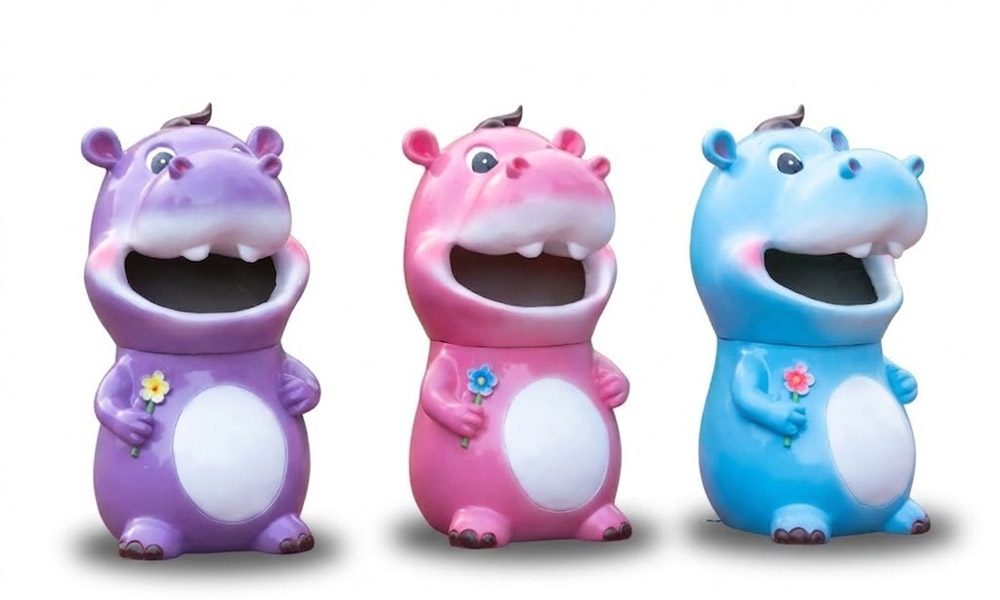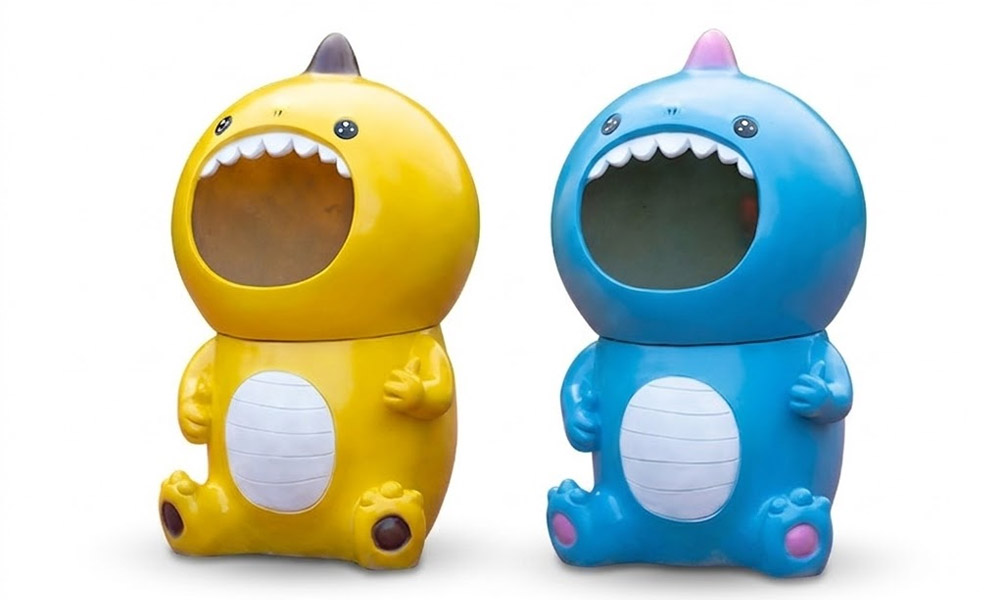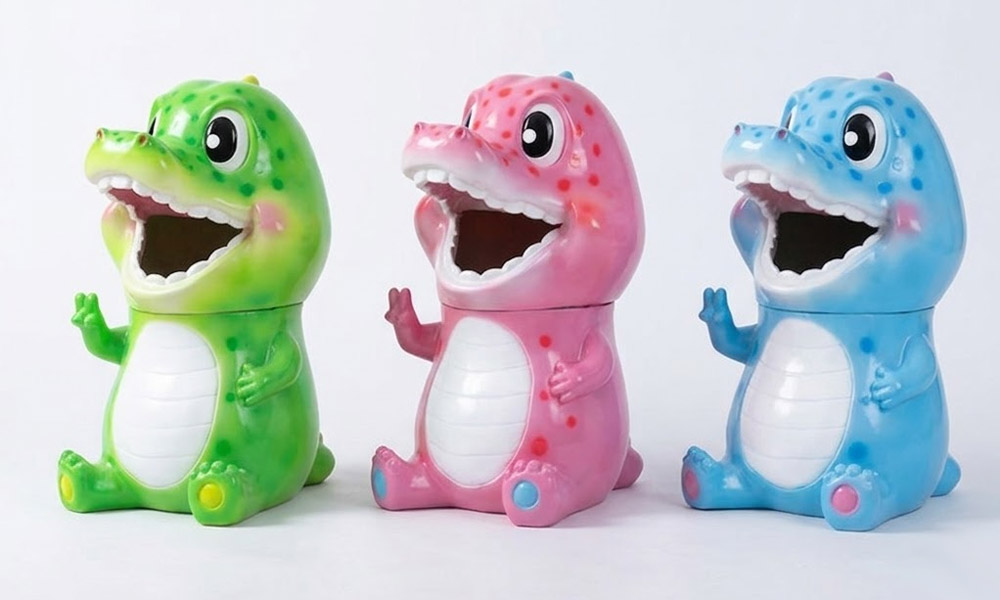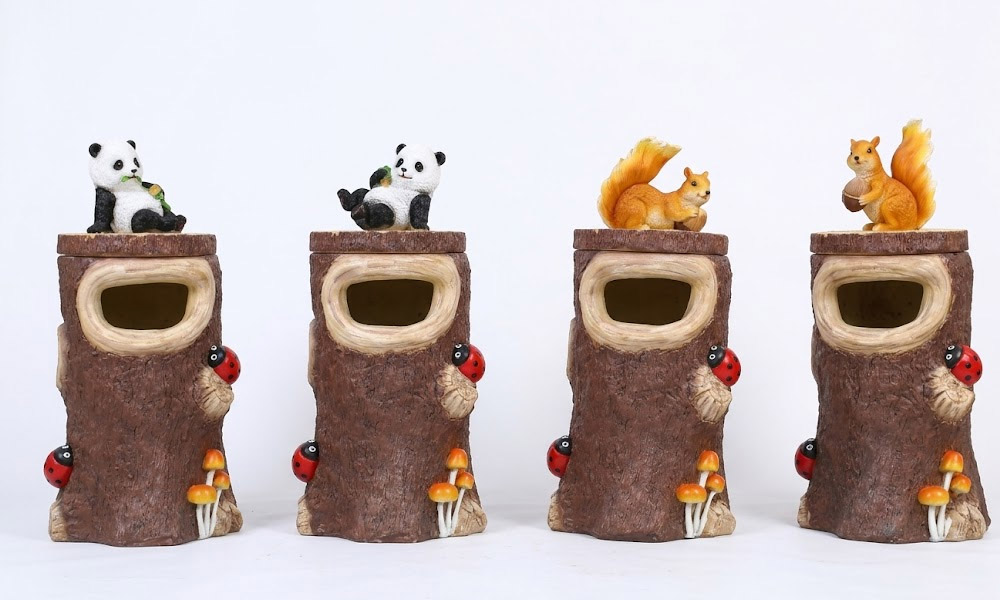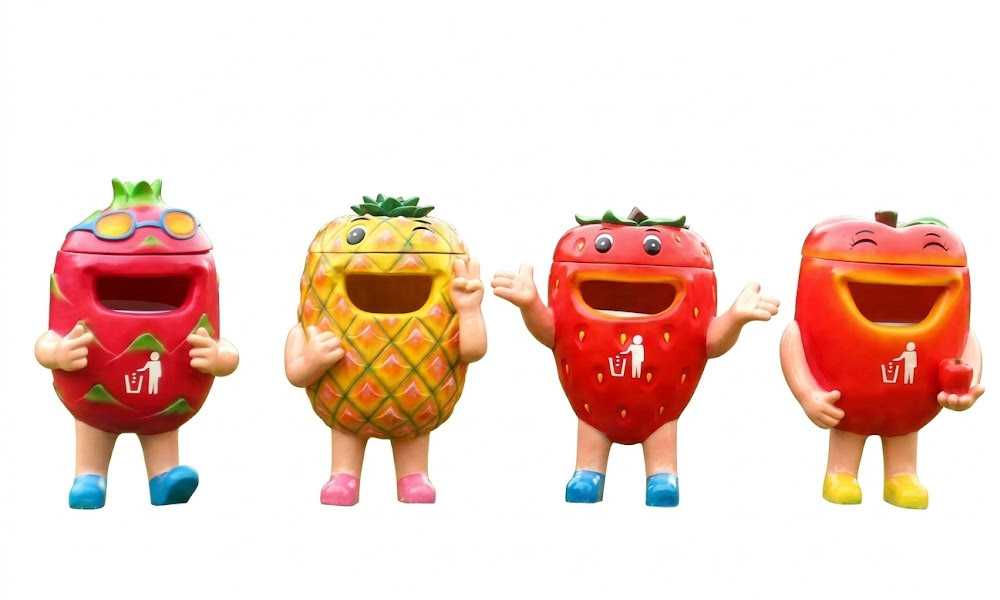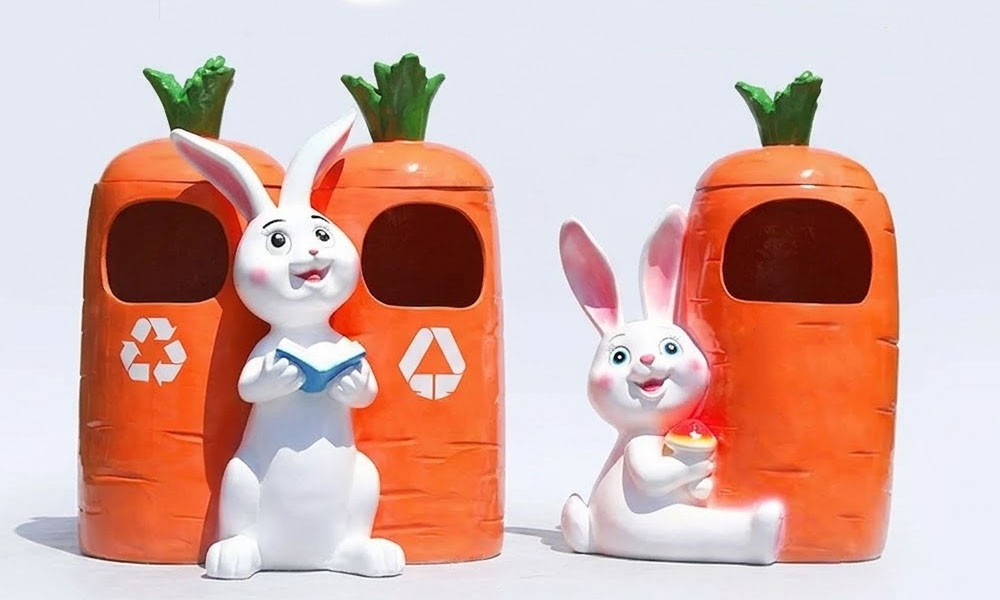
Artistic trash bin statues (often called “Sculptural Receptacles”) are the ultimate fusion of utility and public art. In 2026, urban planners are moving away from hiding waste and instead using these bins as high-profile opportunities for community engagement and environmental education. These aren’t just “decorated boxes”—they are standalone sculptures that happen to manage waste.
The 2026 Shift: Waste as Art
- Interactive Narratives: Modern bins are often designed as “character” statues—like the “Rick the Frog” bins in parks or “Big Trash Animals” by artists like Bordalo II—that use a whimsical or thought-provoking silhouette to encourage people to “feed” the art rather than littering.
- Material Messaging: Many 2026 installations use “Upcycled Realism,” where the statue itself is constructed from the very materials it is meant to collect (e.g., a fish sculpture made of ocean plastic or a metal wolf made of car scrap). This creates a powerful visual cycle of recycling.
- Vandalism Deterrence: Artistic bins are statistically less likely to be tagged with graffiti compared to plain industrial models. The complex textures of a mosaic or a 3D-sculpted surface make them a “natural” deterrent while instilling a sense of neighborhood pride.
- The “Instagram” Effect: By transforming a trash can into a landmark statue, a utility object becomes a photo-op. This drives foot traffic to retail corridors and public plazas, making waste management a key part of “placemaking” strategies.
Did You Know? In cities like San Francisco and Ventura, 2026 initiatives have seen “Art of Recycling” bins become so popular that they are treated as temporary gallery exhibits, with some prototypes costing upwards of $12,000 to fabricate before moving to mass production.